
The Indian Army bravely prevented the Chinese PLA's attempts to unilaterally change the status in the Yangtse area of Arunachal Pradesh's Tawang sector on December 9 and confronted it with firmness, Defence Minister Rajnath Singh said on Tuesday.
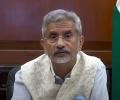
Jaishankar also asserted that it was vital for both the countries to reach an 'accommodation' not just for themselves, but the world has a lot riding on it.

'Why wouldn't so strategically-minded an adversary, such as China, not militarily exploit to the maximum Indian timidity, stupidity, and cupidity all along the LAC and legitimate, as it has done so often in the past, the fait accompli of incremental territorial grabs which, by the way, is its strategy and policy as implemented on the ground?'

Army Spokesperson Colonel Aman Anand said troops from China's People's Liberation Army (PLA) 'violated' the consensus arrived at during military and diplomatic engagements on the ongoing standoff in eastern Ladakh, and carried out provocative military movements to change the status quo.
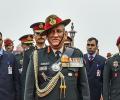
The creation of a CDS has got the head right. Issues that were not talked about for years are now being discussed, points out Ajai Shukla.

A weaker Russia, a sobered China at a time when Xi Jinping is manoeuvring to protect his third term prospects, a reunited West, a chaotic Pakistan. This is a perfect set of strategic circumstances. It is for India now to consummate this historic opportunity, argues Shekhar Gupta.

Keeping the contents of the BBC documentary aside, Rishi Sunak's response needs to be viewed in the backdrop of Britain's historically close relations with Pakistan, argues Lieutenant General Prakash Katoch (retd).
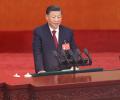
'Which will not happen.' 'Foreign Minister S Jaishankar has expressly refuted Beijing's statement that normalcy was returning to Sino-Indian relations.'

The Standing Committee on Water Resources has recommended renegotiating the Indus Water Treaty with Pakistan to address the impact of climate change on water availability in the river basin and other challenges which are not covered under the agreement.

'If the Chinese military gets hold of some western sectors on the India-China boundary, it will give them added military advantage.'
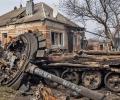
'The wise men learn lessons in war.' 'The smart men learn lessons from others, it's only the foolish who learn the wrong lesson.'
There seems to be a desire for opacity when it comes to confronting China, points out Aakar Patel.

The MEA spokesperson further said the actions and behaviour of the Chinese side since earlier this year along the LAC have been in "clear violation" of the bilateral agreements and protocols concluded between the two countries to ensure peace and tranquility on the border.
Within the army, there is growing concern that New Delhi will allow the Chinese to retain the territory they have occupied in the last month.

The MEA said it was the Chinese side that recently undertakook activities hindering India's normal patrols in the areas.
Most of India's reserves for war in the mountains have been sucked in by the standoff with China. A large part of India's airpower has also similarly been committed on the eastern border. By moving these reserves to the China border, India has been weakened vis-a-vis Pakistan. All in all, the nightmare scenario for India of a two-front war may well come true, warns Colonel Anil A Athale (retd).

Indian Army officers are convinced China is maintaining the pretence of dialogue and negotiations in order to create the opportunity to occupy more Indian territory. Senior Indian planners apprehend this might be a Chinese ploy to divert attention from Depsang, in Northern Ladakh, which might be China's actual target.

India by withdrawing its troops from Depsang Plains of Ladakh de-facto has conceded this territory to China. It needs certain special talents to interpret an ignominious defeat as a diplomatic victory, says Ravindra Narayan Ravi

The only way to resolve the current military standoff along the Line of Actual Control in eastern Ladakh was for Beijing to realise that trying to 'change the status quo by resorting to force or coercion, is not the right way forward', India's ambassador to China Vikram Misri said in a hard-hitting interview to PTI.

Protecting India's sovereignty and integrity will be ensured at any cost, Air Chief Marshal Vivek Ram Chaudhari said on Thursday after taking charge as the chief of the Indian Air Force.
'The Chinese staying put in Pangong Tso, and creating a buffer zone on Indian territory in other areas,' a senior serving general tells Ajai Shukla.
India and Pakistan have agreed to strictly observe all agreements on ceasefire along the Line of Control (LoC) and other sectors, according to a joint statement on Thursday.
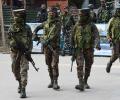
The days of a thousand cuts are over. These mini wars will remain under the threshold of undeniable war, but will escalate closer to that threshold when their big brother pushes in. Chinese aggression has changed the matrix, the strategies, and surely the objectives too, warns David Devadas.
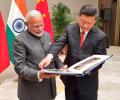
'In South Asia, unlike Southeast, East, or Central Asia, there is a natural hegemon: India. China cannot cast it aside easily'

The Indian Army has shown it can face down the PLA, but is too often held back by a political leadership that lacks boldness, asserts Ajai Shukla.
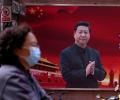
China has not limited the 'battle' to the diplomatic field alone; the People's Liberation Army has become aggressive on the ground too. The recent 'fights' in Northern Sikkim and Ladakh are part of the pattern, asserts Claude Arpi.

The United States has asserted that it stands with India against Chinese aggression as several lawmakers slammed China for choosing a People's Liberation Army soldier.

'I want to assure this House that in these talks we have not conceded anything.' Full text of what Defence Minister Rajnath Singh told Parliament on the Chinese pullback in eastern Ladakh.

Overall, the People's Liberation Army Air Force (PLAAF) has focused on building ground-based air defense networks and network-centric operations rather than trying to match the Indian Air Force (IAF) in terms of straight fighter numbers along the border. All air assets fall under the Western Theater Command of the PLA, the largest geographic region of China's five military theater commands.

The talks took place over video call on Sunday. According to sources, talks were held for over two hours in a cordial and forward-looking manner.

'There is a sense of realism in the Pakistan army that if they needled India during the Ladakh standoff, they would have seen a strong retaliation.' 'Pakistan was hoping that India would come out looking weaker in the region and get embarrassed, but that obviously has not happened.'

In the first highest level face-to-face contact between the two sides after border tension erupted in eastern Ladakh in early May, Singh and Wei met for two hours and 20 minutes in Moscow on Friday evening on the sidelines of a meeting of the defence ministers of the Shanghai Cooperation Organisation.

'The government will ensure that India's pride is not affected as far as the situation along Indo-China border is concerned'
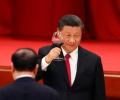
'Having tied himself in knots, he just might take a decision which is dangerous, one that could take his nation to war.'
....a long-term boundary agreement is reached between the two countries.

There will be no let-up in troop deployment or Army operations along the Pakistan borders to fight terrorism and infiltration, military officials said on Thursday after a ceasefire agreement was announced between the two armies which they called a step towards regional peace.

Making a statement in Lok Sabha, Singh also said the Indian Army has inflicted heavy costs including casualties on the Chinese side during the clash with the People's Liberation Army at the Galwan valley on June 15.
Foreign ministry spokesman Zhao Lijian, during a media briefing in Beijing, said that China's position on the border related issues is clear and consistent. "We have been following the important consensus reached by the two leaders and strictly observing the agreements between the two countries," he said, apparently referring to the directions of Chinese President Xi Jinping and Prime Minister Narendra Modi after their two informal summits, asking the militaries of the two countries to take more confidence building measures to maintain peace and tranquillity along the borders.

'The Chinese fault lines are tremendous and we need to exploit them.'

By jettisoning the vision of multilateral world in favour of a Han Empire, China has posed a major long term challenge to India. India must stand firm against Chinese expansionism but also keep a door open for future detente by making a clear distinction between Chinese people and the current Chinese leadership, observe Lieutenant General Ashok Joshi (Retd) and Colonel Anil Athale (Retd).
